





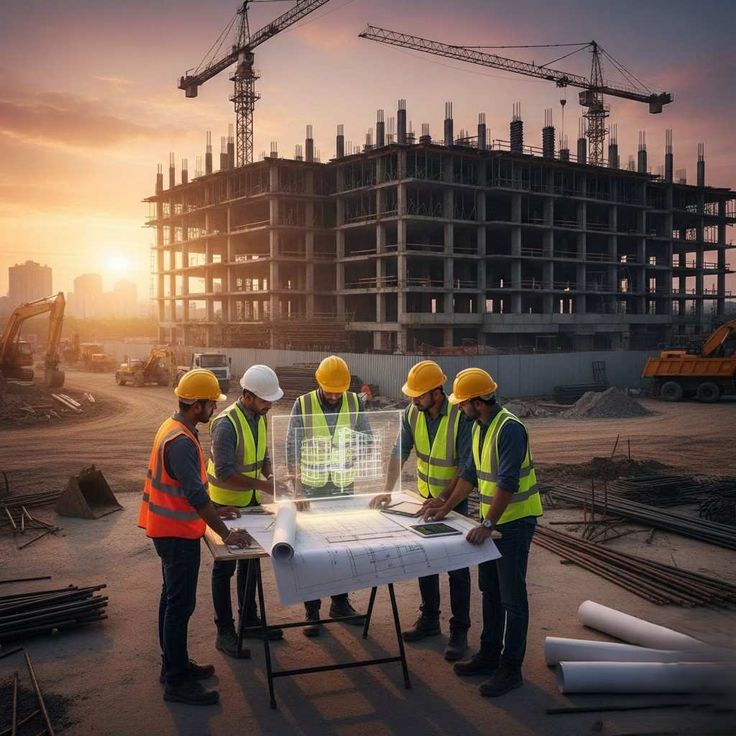
Security should not be overlooked in construction sites, as they are quite dangerous. Risks are varied and include those related to electricity hazards, machinery and falling objects that expose workers to injury. Moreover, in case they do not know of the risks, people visiting the site might be at risk as well. To make sure all people at the site are safe, it is necessary to review and revise safety measures.
This blog will present the best seven Safety tips on construction sites. These will reduce the likelihood of injuries and accidents and make construction sites safer areas that visitors can visit, including the workers and all other persons. As a construction site manager or supervisor, worker or visitor, these pieces of advice will help keep you safe at work.
7 Construction Safety Tips :
Fall Protection
To help keep the workers safe, they should be guarded against falls that may occur into an opening like a skylight, lift shafts, and excavations. Employers also need to provide workers with hard caps or toeboards, screens or guardrails, in addition to installing canopies and barricades to ensure they do not get to the work area and protect the workers against falling debris.
The employer must offer fall protection equipment to ensure that the employee is safe when walking or working in any area where the edges are unprotected, or sides are more than six feet above an upper level. Fall preventive measures also exist, such as net safety systems, guardrails, and personal fall safety nets. The only thing that is allowed to prevent falls is guardrails. Personal fall arrest and safety devices ensure that the distance covered by workers falling is substantial.
Scaffolds
Hard helmets should be worn when working on, under or on a scaffold. Working on scaffolds also requires workers to wear strong, non-slip work boots and to use tool lanyards to prevent falls and slips and to save workers under the scaffold. Do not work on scaffolds that are covered with ice, dirt, or water. Workers on a scaffold are not permitted to use boxes, ladders or other objects to further raise their height.
Workers should not approach their maximum weight when they work on scaffolds. At the end of the shift, be careful not to leave equipment, tools or other supplies at the top of the ladder. Access to the platform to work should only be accomplished by workers climbing on scaffolding at the points of access. All materials and tools must be taken to the platform once the worker has been lifted onto the platform to engage in work.
Ladders & Stairways
The ladders have to be inspected by a trained individual before use. Any damaged ladder should be identified or marked out and removed from service until it has been repaired at the appropriate time. Employees should be educated on how to be safe with ladders and how to use the correct ladder at work. In constructing all ladders, safety regulations must be met. This is applicable to both custom-built ladders and permanent ladders, and also to portable ladders, with or without self-support. In cases where employees are working with electricity, ladders should have nonconductive side railings.
Personal Protective And Life Saving Equipment
Employees must have them and must wear appropriate Personal Protective Equipment (PPE) in order to protect themselves against certain hazards. This provides eye and face protection in case of the risk of flying particles, liquid chemicals, molten metals, caustic or acidic liquids, chemical gases, vapors or any other harmful radiations of light. This is often the case when dealing with drilling or welding, chipping, grinding or sanding, masonry and woodworking work.
Side-protection (side shields, which can be removed) should also be provided to the eye protection in case of any danger, e.g. due to flying objects. Workers should regularly check PPE and change damaged or worn-out items as soon as they become damaged or obsolete.
Environmental Conditions (e.g. Excessive Heat)
The workers should not be exposed to any danger from the environment, such as extreme cold, extreme heat, humidity or wind, which may severely affect the health of the workers and their performance.
Extreme Heat: Employers should offer cool or shaded resting spaces, adequate water availability, and rest in the summer heat. Employees are to wear loose, airy garments and be trained on how to identify the signs of heat stress or heat exhaustion. heat stroke.
Cold weather In cold weather, they should be provided with insulated clothes, gloves and shoes. Employees should have regular warming-up, and extended time in freezing temperatures should be avoided.
Wet or Rainy weather conditions: It is necessary to wear waterproof and slip-resistant shoes so as to avoid accidents.
Keeping environmental conditions in check and changing working practices to suit environmental conditions will prevent injuries, illness, and fatigue.
Hazardous substances
Employers must develop an unwritten plan to communicate hazards that contains an inventory of the most hazardous materials that are used on their premises. All containers that hold dangerous substances should have labels with the hazards and warnings. There should be an MSDS for every hazardous product available to employers. Staff need to be educated on the risks associated with hazardous substances as well as instructions on how to handle the substances safely.
General Health and Safety Provisions
Employers are obligated to have security measures in place that safeguard workers against accidents and see to it that these accidents do not occur. Inspection of work areas machines, equipment, and other items must happen under the supervision of a qualified person or group of people. This implies that any equipment and tools that are not conforming are either cleared out of the workplace or are tagged and padlocked. Any industry standard which is equivalent to a construction standard must be substituted.
Employers must educate all employees regarding hazards and other issues in relation to construction regulations that relate to the responsibilities of a worker and offer employees appropriate PPE at no cost.
Construction Safety Audit and Construction Safety Training at NIST Global.
NIST Global provides construction and audit specialised security training based on your requirements. We are one of the topmost safety companies in India and offer the best security services.




More Stories
Planning Your Inground Pool Before Building
How Haul and Dump Services Make Construction Debris Removal More Convenient
How Proper Land Preparation and Drainage Protect Your Property