





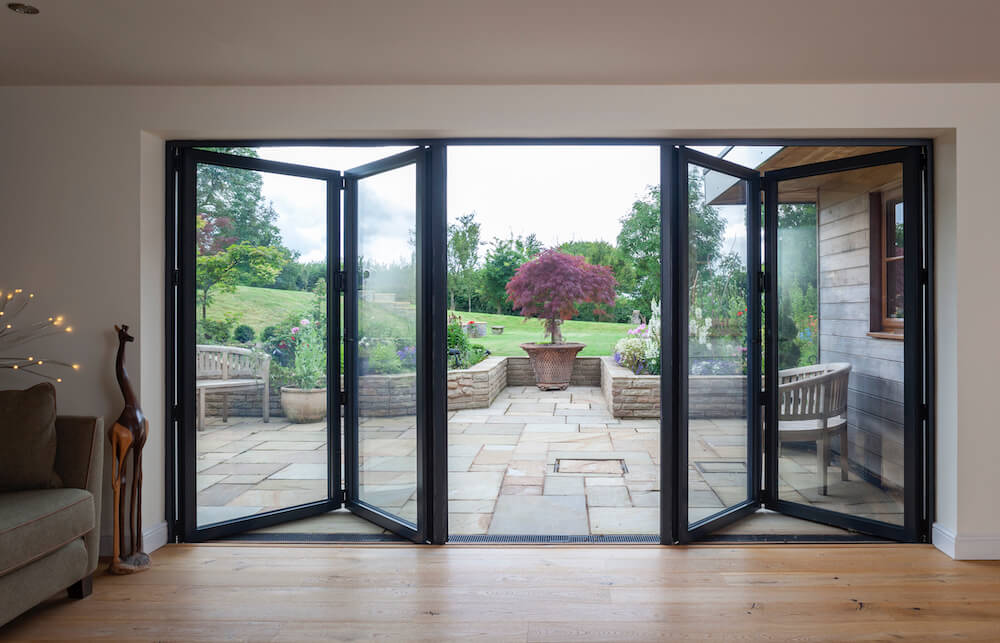
How Do You Define Sliding Doors?
Modern sliding doors operate on tracks that allow large glass panels to slide over each other. The fundamental principle hasn’t changed significantly since its first appearance in the 1970s. However, the modern systems are made of higher-quality materials and have smoother operation.
Sliding Door System Types
Sleek sliding patio doors are the most popular among the kinds of sliding doors found in British homes. They feature narrow frame widths and large glass surfaces. The running gear, which is comprised of tracks and wheels that allow sliding, can be found in two primary variations. Inline systems that are standard move horizontally and require little effort to lift, whereas lift-and-slide systems elevate the door slightly off the track while it’s in operation, which reduces friction and makes even huge panels easier to move.
Important Elements
The frame is the foundation for any sliding device, usually made of aluminium, timber, or uPVC. The thermal breaks in metal frames stop heat loss, and multi-point locking systems built into the frame provide security. Sliding doors of high-end quality use triple or double glazing, which is mounted inside precision-engineered roller units.
Performance and Materials of the Frame
Different materials for frames suit different budgets and needs. Aluminium provides slim profiles and is durable, even though it is more expensive than uPVC. If you’re comparing sliding doors, wood provides natural insulation but requires frequent maintenance to avoid stretching. Modern uPVC frames combine costs and performance, but they aren’t able to match aluminium’s sleek lines.
Technical Characteristics
The advantages and disadvantages of sliding doors are often linked to their mechanical design. Tracks, rollers and weather seals are all in place to provide stable motion and resistance to weather. Modern systems employ synthetic bearings, as well as anodised aluminium tracks for a smooth and efficient operation with no metal-on-metal contact. The majority of installations have hardened safety glass in the standard configuration as well as advanced systems that have self-cleaning coatings or solar control features.
Pros and Cons of Sliding Door Design
Modern sliding doors provide a powerful visual impact due to their massive glass panels and simple frames. When you compare the advantages and disadvantages of sliding doors versus other alternatives, their sleek lines and uninterrupted views immediately stand out.
Visual Advantages
The wide transparent glass frames dominate the look for sliding doors, bringing sunlight into the living areas. Sliding doors that are ultra slim push this advantage to the next level with frames as thin as windows. The removal of the visual barriers between rooms and gardens creates the illusion of space with clear views across the window.
The simple frame profile suits modern architecture especially well. Aluminium frames that are powder-coated come in a myriad of colours that match or contrast with the windows you already have. Black frames are a common choice as they appear to disappear behind the glass when seen from the inside.
Design Restrictions
The advantages and disadvantages of sliding doors become clear when you look at their structural requirements. Frames that support loads cannot shrink past certain sizes, especially at the bottom track, which has to be able to support the entire weight of the door. Track systems also need a more visible framework than alternatives, particularly at the edges where panels can be stacked.
Glass panels come with limitations of their own. The larger sizes add weight and limit the number of panels that can actually move. Opening configurations remain relatively fixed, unlike bifolds. Sliding doors aren’t able to completely clear the opening. A majority of doors let only half the opening width at a time.
Configurations for Frames and Panels
Panel layouts require meticulous planning to ensure that they function properly. Two-panel designs provide simplicity, but they limit opening widths. Three or four panels allow for greater flexibility, but the fixed panels restrict the width of access. Sliding configurations must always have at the very least one fixed panel, making it less likely to have fully free areas.
Design Decision
Glass is the dominant visual experience of sliding doors, creating stunning designs in every space. The sleek lines and minimal frame of modern systems give amazing views, but structural requirements place limits on the design options. The arrangement of panels determines a lot of the design by balancing open space with practicality.
If you have rooms that need lots of light, sliding doors are excellent at giving uninterrupted views. Their slim frames eliminate the many splits that are common in bifold doors, while they offer greater glass panels than French doors are able to accommodate. However, their lack of a completely clear opening might not work for certain locations or styles.
Benefits and Drawbacks in Practice
The practicality of sliding doors affects the way that people use their homes. Reviewing the advantages and disadvantages of sliding doors will reveal important variations in their daily functioning compared to other kinds of doors.
Everyday Benefits
Space efficiency is one of the main benefits of sliding panels, which are able to move along the walls rather than sliding into the space. This permits furniture placement all the way to the doorway without hindering the movement. Contemporary sliding systems glide effortlessly with little effort, which makes operation simple even when large glass panels are used.
The thermal performance is impressive in well-designed systems. Double-glazed units that have thermal breaks in the frames can reduce the loss of heat significantly, and solar control glass aids in managing temperatures all year round. The solid seals around sliding panels prevent draughts from entering better than hinged doors.
Features for Security
Multi-point locking systems lock the doors at multiple points along the frame. The toughened safety glass is resistant to breaking, and anti-lift devices stop panels from being pushed to fall off the tracks. Modern sliding doors typically have internal beads, which means that the glass cannot be removed from the outside.
Common Problems
In weighing the advantages and disadvantages of sliding doors to patios, there are some limitations that can be seen. Tracks require frequent cleaning to avoid the build-up of dirt, which can impede the smooth operation. Ground-level tracks can collect leaves and debris, which requires more frequent maintenance than higher doors.
The size of openings is limited by the requirement for fixed panels. Even the most powerful systems are able to open only 50% of their entire length, which restricts airflow as compared to bifolds or French doors. Although modern systems operate smoothly, large panels may still be heavy to use, especially when they are used in lift-and-slide designs.
The bottom track can pose a challenge in certain circumstances. While modern low-threshold solutions reduce the height of the step-over, fully flush thresholds aren’t typically possible when sliding doors are used. The drainage channels that drain water within the track must be kept free of obstructions.
Realistic Living Conclusion
The day-to-day operations reveal the true benefit that sliding doors offer in a variety of situations. Their compact design and effortless operation are especially well in smaller spaces or in areas with restricted space. Security features can be compared to other door styles, and thermal performance aids in reducing energy consumption.
Maintenance requirements differ based on the location and use, but they are generally manageable. Regularly cleaning the tracks and occasionally adjusting the running gear ensures running smoothly. The advantages and disadvantages of sliding doors usually depend on the specific details of installation, such as proper drainage, the right threshold heights, and appropriate weights for the panels, all of which contribute to the longevity of satisfaction.
The options for ventilation are fewer than other options, but the right placement of panels can make a difference. People who want maximum airflow may prefer different types of doors that are more space-based; those who want efficiency and security usually find that sliding doors satisfy their requirements perfectly.
Advantages of Room-by-Room Sliding Doors
The different spaces of the home provide unique challenges to door installation. The advantages and disadvantages of sliding doors differ greatly depending on the location they’re installed and the manner in which they’re employed.
Garden Doors for Kitchens
The sliding doors that connect the kitchen to the garden provide stunning views when cooking or dining. Large glass panels allow you to monitor the children outside and let natural light brighten the mood while cooking food. The flat tracking system is particularly beneficial in kitchens, with step-free access for transporting food items or dishes outside.
Steam from cooking and odours from food require adequate airflow, which doors that slide open might not always offer. The openings are restricted to about 50 per cent of the width, which may limit airflow on hot days. But sliding mechanisms ensure that doors are completely clear of kitchen traffic, whereas swing doors could hinder busy cooking areas.
Rain protection is dependent on the threshold height and installation. The higher thresholds for doors keep the water from entering more effectively, but also make the steps more noticeable. Lower thresholds allow for easier access; they require better drainage and regular cleaning, particularly for kitchens with exposed gardens.
Doors in the Living Room and Kitchen
Doors that slide between the living and kitchen areas can save floor space in open-plan designs. The advantages and disadvantages of sliding doors are more relevant here. While they permit light to circulate and clear view between rooms, they require careful planning to ensure the privacy of your home and to reduce noise.
Sound insulation is heavily dependent on the thickness of glass and sealing quality. Double-glazed panels can reduce noise transfer more efficiently than single-glazed panels, but they are more expensive. If the smell of cooking is not a good thing in the living spaces, the close seals around sliding panels can help keep them out better than other doors that fold.
Door placement requires careful consideration in these places. The location of the fixed panel determines the flow of traffic, and handle positions should function well from both sides. The panel’s weight is a major factor when it comes to doors that are frequently used, making lighter systems more appropriate to use in daily operations.
Balcony Entry
Balcony doors have unique challenges when it comes to wind loads and exposure. The advantages and disadvantages of sliding doors that are higher positions include great protection against wind when they are closed; however, they could face handling issues when the wind is gusty. They have large glass areas that provide clear views that are particularly appealing when viewed from higher floors.
Security requirements are different at higher levels and require different locks than those for ground-floor installation. Multi-point locks are still important, and anti-lift systems become particularly crucial.
Glass specifications are of greater importance when it comes to balcony installation. Solar control coatings can help reduce the heat gain of units facing south. Self-cleaning options help minimise maintenance requirements at high elevations. Pressure ratings for wind require cautious monitoring, especially when larger panels are located in areas that are exposed.
Location-Specific Decision
The patterns of use for rooms determine the extent to which sliding doors can benefit every space. Kitchens have the benefit of easy cleaning and unimpeded workflows, but ventilation needs additional planning. The doors that connect living spaces and kitchens can be used to facilitate space division while keeping the lines of sight and light flow.
Balcony designs showcase the stability benefits from sliding, weather-resistant and security features being particularly useful. But each area has particular requirements for threshold heights, drainage, design and weights for the panels that affect the overall effectiveness.
Frame specifications and glass options should be tailored to each space’s specific requirements. Kitchen cabinets may be geared towards ease of cleaning and resistance to heat, while balconies’ doors concentrate more on wind load along with thermal energy efficiency. Interior doors are often geared towards ease of operation and noise control of the weather.
The size of the panels can vary based on the location, as well. Doors for kitchens and gardens typically require bigger panels to provide better views, while doors for internal use may be better suited to smaller, lighter sections. Balcony designs must be able to balance ideal opening dimensions with wind load requirements, as well as practical requirements.




More Stories
New Custom Home Design Trends that Prioritize Aesthetics and Functionality
What To Look For In The Best Luxury Bedding Brands